
Table of Contents
Introduction to E20 Fuel
E20 fuel is becoming one of the biggest changes in India’s fuel landscape. It represents a significant move toward cleaner and more sustainable mobility. In simple terms, E20 fuel is petrol mixed with 20% ethanol and 80% regular petrol. This new blend aims to lower the environmental impact of vehicles, support agricultural growth, and reduce India’s reliance on imported crude oil.
Ethanol is a renewable biofuel, usually made from sugarcane, rice straw, maize, and other biomass materials. Being an agriculture-rich country, India’s ethanol production not only cuts carbon emissions but also strengthens the rural economy by increasing demand for farm products.
The Government of India is actively promoting the use of ethanol-blended petrol through the National Ethanol Blending Programme. They aim to reach 20% blending by 2025. Currently, E10, which consists of 10% ethanol, is already used in most areas. The country is gradually moving towards E20.
The main difference between E20, E10, and regular petrol is the ethanol content. E10 is safe for almost all modern vehicles, while E20 fuel needs engine adjustments and material compatibility. That’s why manufacturers are beginning to produce E20 fuel compatible vehicles. These vehicles are designed to ensure that engines, fuel systems, seals, and pipes can handle the ethanol-rich mix safely.
Introducing E20 fuel is more than just changing petrol composition. It is a major step toward India’s sustainability goals. This move aligns with practices in countries like the U.S. and Brazil and opens the door for greener transportation across India.
What Makes E20 Different? (Composition & Chemistry)
E20 fuel is different from regular petrol and E10 because it has a higher ethanol concentration. E20 consists of 20 percent ethanol and 80 percent conventional petrol. This blend behaves differently in the engine. Knowing the chemistry of E20 fuel helps consumers understand the importance of compatibility and the benefits or challenges this fuel offers.
Ethanol is an organic compound with oxygen molecules that help achieve cleaner combustion. When used with petrol, ethanol improves fuel burning efficiency, resulting in fewer harmful emissions like carbon monoxide (CO), hydrocarbons (HC), and particulate matter. This is a key reason why E20 fuel is seen as a greener and more sustainable option.
Ethanol also has a higher octane rating than regular petrol. The octane rating indicates how well a fuel can resist knocking during combustion. A higher octane level leads to smoother engine performance and possibly better results for engines designed to utilize it. E20’s higher octane allows modern engines to run more efficiently, especially those tuned for ethanol blends.
Another important feature is that ethanol is renewable. It is made from sugarcane juice, molasses, food grains, and various agricultural waste. This reduces reliance on fossil fuels. As a result, E20 is a more eco-friendly choice that promotes energy security and supports rural economic growth.
However, ethanol has some properties that need consideration. It is more corrosive than petrol and can absorb moisture from the air because it is hygroscopic. These traits can cause material degradation in parts not built for higher ethanol blends. That is why some older vehicles may struggle with E20.
In summary, E20 is more than just a modified petrol blend; it signifies a significant change in fuel chemistry that aims to improve combustion efficiency and lower environmental impact. As India moves toward greener mobility, understanding these differences will help consumers make better choices about their vehicles and fuel options.
Benefits of Using E20 Fuel
The introduction of E20 fuel offers many benefits for vehicle owners, the environment, the economy, and the agricultural sector. As India shifts toward a cleaner and more sustainable energy system, E20 plays a key role in the future of mobility.
- Environmental Benefits
One of the main advantages of E20 fuel is its ability to significantly reduce harmful emissions. Ethanol contains oxygen, which helps fuel burn more completely in the engine. This results in lower carbon monoxide (CO), hydrocarbons (HC), and nitrogen oxide (NOx) emissions. By promoting cleaner combustion, E20 improves air quality in cities with high pollution levels.
Ethanol is also a low-carbon fuel, releasing fewer greenhouse gases compared to traditional petrol throughout its life cycle. From production to combustion, E20 fuel has a smaller carbon footprint, aiding India’s efforts to meet its climate goals.
- Reduced Dependence on Crude Oil Imports
India relies on imports for nearly 85% of its crude oil. By using ethanol produced domestically from agricultural sources, the country can lessen its reliance on imported fossil fuels. This not only enhances national energy security but also saves foreign exchange.
- Boost to the Agriculture Sector
Ethanol production supports farmers by increasing demand for crops like sugarcane, maize, and other biomass materials. Surplus or damaged grains that would otherwise be wasted can be used to make ethanol, providing more income opportunities for rural communities.
- Economic Advantages
The introduction of E20 fuel encourages investment in biofuel infrastructure, ethanol plants, farm mechanization, and rural industries. This generates more jobs in agriculture, manufacturing, and fuel distribution.
The government’s long-term plan to adopt ethanol blending is expected to significantly cut petrol consumption. This change could lead to billions of rupees in annual savings.
- Engine Performance Improvements
E20 fuel usually has a higher octane rating, which benefits modern engines. A higher octane rating means better resistance to knocking, allowing engines to run smoother and more efficiently, especially when tuned for ethanol blends.
- Sustainability Benefits
Since ethanol is renewable and bio-based, every liter of E20 fuel brings India closer to a sustainable, circular energy system. It promotes the use of agricultural residue and helps lessen the environmental impact of fossil fuels.
E20 Fuel Compatibility: Is Your Vehicle Ready?
As India moves to E20 fuel, one of the key questions for vehicle owners is: “Is my vehicle compatible with E20?” While E10 is safe for nearly all modern vehicles, E20 fuel requires specific engine design, materials, and calibration to work well. Knowing about compatibility is vital to prevent long-term damage and ensure good vehicle performance.
- What Does E20 Compatibility Mean?
A vehicle labeled as “E20-compatible” is designed for safel use petrol that contains up to 20% ethanol. This includes:
- Specially designed fuel lines
- Ethanol-resistant rubber and plastic parts
- Modified fuel pumps
- Engine calibration suited for E20 blends
Manufacturers make these updates so the vehicle can run smoothly without causing corrosion or damage to internal components.
- How to Check if Your Vehicle Is E20-Compatible
There are several simple ways to confirm compatibility:
- Vehicle Owner’s Manual: Most manuals now include fuel recommendations.
- Fuel-Cap Label: New vehicles often have “E20” printed on the fuel lid.
- Manufacturer Website: Brands like Maruti Suzuki, Honda, Hero, Bajaj, and Tata publish lists of compatible models.
- Dealership Inquiry: A dealership can check engine and fuel system compatibility using the VIN (Vehicle Identification Number).
If your vehicle was released after 2023, there’s a good chance it is already designed for E20 fuel or is partially compatible.
- Vehicles Generally Compatible with E20
Many two-wheelers and cars launched in recent years are considered E20-ready. Some categories include:
- New-generation hatchbacks and sedans
- Most 2023-2025 scooters and bikes
- Modern SUVs and compact crossovers
- BS6 Phase-II compliant vehicles
However, older vehicles made before 2020 may not be fully compatible.
- Risks of Using E20 in Non-Compatible Vehicles
Using E20 in a non-compatible vehicle can result in:
- Corrosion of fuel lines and tank
- Damage to rubber seals and gaskets
- Wear or failure of the fuel pump
- Decline in mileage
- Poor engine idling or knocking
Over time, this can raise maintenance costs and shorten engine life. That’s why checking compatibility is important before switching to E20.
- Dual-Fuel Tolerant vs Fully E20-Compliant
Many new vehicles sold today are dual-fuel tolerant, meaning they can operate on E10 and E20 without major problems. However, fully E20-optimized engines provide:
- Better performance
- More stable mileage
- Greater fuel efficiency
Knowing which category your vehicle falls into helps you plan long-term maintenance more effectively.
Impact of E20 Fuel on Mileage & Performance
As E20 fuel becomes more common in India, many drivers worry about its impact on vehicle mileage and performance. Since E20 contains more ethanol, which has different combustion characteristics compared to petrol, it’s reasonable to ask if this blend will improve or hurt fuel economy, power delivery, and driving smoothness. Let’s take a closer look.
- Mileage Impact: What to Expect
- Ethanol has less energy per liter than petrol. This means that as the ethanol percentage rises, the total energy delivered to the engine decreases slightly. Most vehicles may see:
- A slight drop in fuel efficiency (2 to 6%), depending on the engine design.
- A bigger drop in older or non-optimized engines.
- Minimal change in new engines designed for E20.
Modern engines calibrated for E20 can make up for this lower energy content, reducing mileage loss. For ordinary city driving, most users may not notice a significant difference.
- Engine Performance Changes
- Ethanol has a higher octane rating, which is good for performance. Higher octane fuels reduce engine knocking and let the engine run more efficiently under load.
- For vehicles designed for E20, this can lead to:
- Smoother acceleration.
- More consistent combustion.
- Better performance at higher RPMs.
In non-optimized engines, however, performance might feel a bit inconsistent until the ECU adapts to the new blend.
- Combustion Efficiency
- Because ethanol contains oxygen, it helps the fuel burn more completely. This leads to:
- Cleaner combustion.
- Less carbon buildup.
- Lower tailpipe emissions.
Vehicles with advanced ECUs and sensors benefit the most because they can accurately adjust the air-fuel ratio for ethanol-blended petrol.
- Cold Start Behavior
- Ethanol is harder to vaporize in low temperatures compared to petrol. This might cause:
- Some difficulty starting in cold weather (mainly in very cold areas).
- Longer crank times for older engines.
- In India’s climate, most users should not experience significant issues, especially in urban areas.
- Impact on Engine Components
If your vehicle complies with E20 regulations, engine components like:
- Fuel injectors.
- Hoses.
- Fuel pump.
- Seals.
- Pipes.
are made with materials that resist ethanol. This ensures:
- Less wear.
- Stable performance.
- Consistent fuel delivery.
Vehicles that are not compatible may gradually see these parts wear out, which could affect performance over time.
- Real-World Driving Experience
Drivers of E20-compatible cars and two-wheelers may notice:
- Sharper throttle response.
- Cleaner exhaust smell.
- Less knocking or vibration.
- In older vehicles, drivers might experience:
- A slight decrease in pickup.
- A minor increase in fuel usage.
Overall, E20 is designed to provide better combustion and smoother performance in compatible vehicles.
Challenges & Concerns With E20 Fuel
The shift to E20 fuel is an important step towards a cleaner and more sustainable future for cars, but it comes with several challenges that vehicle owners, manufacturers, and fuel distributors need to consider. One immediate concern is material compatibility. Ethanol is more corrosive than petrol. When the concentration reaches 20%, older vehicles not designed with materials resistant to ethanol may suffer faster degradation. Parts like rubber hoses, plastic components, seals, gaskets, and even fuel pumps can wear out more quickly with E20 exposure. This can lead to leaks, lower fuel system efficiency, and higher maintenance costs for vehicles that aren’t certified for E20.
Another challenge is that ethanol absorbs moisture from the air. Higher ethanol content can increase the risk of water building up in the fuel tank. This accumulation can cause corrosion in metal parts and lead to unstable combustion. In older vehicles, this moisture can speed up rust and cause problems like misfiring, rough engine performance, or the formation of unwanted deposits in the fuel system.
Fuel efficiency is another area of concern. Ethanol has less energy per litre than regular fuel. Vehicles using E20 may see a small but noticeable drop in mileage. For newer engines that are tuned for E20, this decrease is usually mild and manageable. However, older engines that depend on traditional petrol may notice a bigger decline in fuel economy, especially during long trips or highway driving.
Performance issues may also occur in vehicles not completely suited for E20. Engines not made for higher ethanol blends might experience slight knocking, uneven idling, or reduced power. In colder areas, starting the vehicle may take a bit longer since ethanol evaporates more slowly than petrol in low temperatures. While these issues may not be serious, they can affect the overall driving experience for owners of older models.
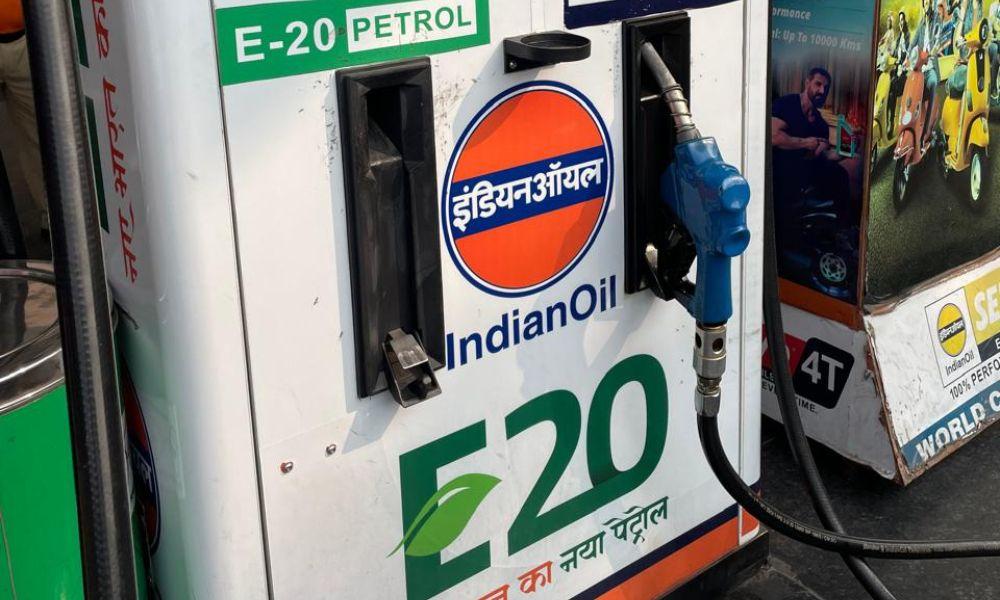
The distribution and storage of E20 fuel also pose challenges. Fuel stations may need to upgrade their storage tanks, pipelines, and dispensing systems since ethanol can cause corrosion in equipment not designed for it. Preventing phase separation, where water and ethanol separate from petrol, is also vital for maintaining fuel quality and safety. Making these infrastructure changes requires investment and time, meaning not all fuel stations can quickly switch to E20.
Availability is another issue during the initial rollout. E20 is being introduced gradually, so some areas will have E20 while others stick with E10. This uneven distribution can confuse consumers, making them uncertain about which blend to use or how mixing different blends could affect their vehicle’s performance. Many drivers may not know whether their vehicle is compatible with E20 or how to maintain their engine while using it, complicating matters further.
Finally, there’s the challenge of producing enough ethanol to meet national needs. Boosting ethanol production requires better agricultural output, effective distillation units, and a strong supply chain. Seasonal changes in crop yield can also impact ethanol availability, underscoring the importance of diversifying the raw materials used for ethanol.
In summary, while E20 fuel has many benefits, its challenges must be managed carefully through technological upgrades, consumer awareness, and coordinated efforts across different industries. As India progresses, addressing these issues will be crucial for a smooth and successful transition to ethanol-blended fuel.
India’s Roadmap to Ethanol-Blended Petrol
India’s journey toward adopting ethanol-blended petrol has been a slow but well-planned process. The government launched the National Ethanol Blending Programme to reduce the country’s heavy reliance on imported crude oil and cut carbon emissions. Over the past ten years, India has steadily raised its ethanol blending percentage, moving from E5 to E10 in most states. The current plan aims for 20% ethanol blending across the country. E20 has already started rolling out in some cities as part of the first phase of this implementation. This shift is expected to speed up as more manufacturing units and petrol stations upgrade their systems to handle the new blend.
The government’s goal of reaching 20% blending by 2025 has prompted automakers, fuel companies, and farming industries to adjust their operations to match this energy shift. Automakers have updated several models to make them E20-compatible, ensuring they can safely use higher ethanol blends without compromising performance or durability. Fuel companies are also improving their storage tanks, pipelines, and dispensing systems to accommodate ethanol-blended petrol, which needs materials that can resist ethanol’s corrosive properties.
In agriculture, ethanol production is expanding through both traditional and alternative sources. While sugarcane remains the main raw material, the government is promoting the use of maize, damaged grains, and agricultural waste to ensure a steady ethanol supply throughout the year. This strategy not only diversifies production but also supports the rural economy by creating new income sources for farmers.
The rollout of E20 fuel is happening in phases to ensure a smooth transition. Initially, E20 is being introduced in major cities where infrastructure is more developed and vehicle compatibility is higher. Over time, the blend will be available in both urban and rural areas as production and supply chains improve. The long-term vision is to make E20 the standard fuel option nationwide, with even higher blends like E85 possibly becoming practical for flex-fuel vehicles in the future.
India’s plan shows a strong commitment to cleaner energy, economic growth, and technological progress. As the country continues to boost its ethanol production and improve its distribution networks, E20 fuel will gradually become more available, paving the way for a greener and more self-sufficient automotive environment.
Conclusion
The introduction of E20 fuel is an important step in India’s quest for cleaner, greener, and more sustainable mobility. As the country reduces its reliance on imported crude oil and shifts toward renewable options, ethanol-blended petrol becomes a practical and effective solution. While this change brings clear environmental and economic benefits, it also requires awareness, preparation, and responsible use from vehicle owners, manufacturers, and fuel suppliers. It’s crucial to understand compatibility, maintain proper vehicle care, and stay informed about fuel quality to ensure a smooth experience with E20.
Despite some challenges related to material compatibility, mileage differences, and infrastructure readiness, the long-term advantages of E20 outweigh its downsides. It supports India’s agricultural sector, lowers carbon emissions, and builds a foundation for a self-reliant energy system. As more E20-compatible vehicles come to market and fuel becomes more widely available, consumers will gradually enjoy cleaner combustion, better performance in optimized engines, and a more sustainable driving future.
In the end, E20 fuel is not just a change in fuel composition; it signals a strategic move toward a healthier environment and a strong energy sector. With the right information and proper vehicle care, drivers can confidently support this shift, contributing to a greener and more progressive India.