Table of Contents
Introduction – XEV9s vs Harrier EV: The EV Battle India Is Waiting For
The Indian electric vehicle market is entering an exciting phase. At the heart of this change is a comparison that has buyers puzzled: XEV9s versus Harrier EV. These two upcoming electric SUVs are not just new models; they reflect two very different ideas about how electric SUVs should be designed for India.
On one side is the Mahindra XEV9s, part of Mahindra’s Born Electric lineup. It is designed from the ground up as a pure electric vehicle. On the other side is the Tata Harrier EV, an electric version of one of India’s most popular petrol and diesel SUVs. It benefits from Tata’s strong EV ecosystem and market trust. When buyers look into XEV9s versus Harrier EV, they are really asking: Which electric SUV is more ready for the future?
This comparison matters because by 2026, the Indian EV buyer will be much more informed than today. Range anxiety, charging speed, platform safety, software reliability, and long-term ownership costs are now as important as design and performance. Both Mahindra and Tata understand this, which is why the battle between the XEV9s VS Harrier EV is so fierce.
The Mahindra XEV9s is expected to show off Mahindra’s best EV technology yet. Built on a dedicated EV platform, it promises a futuristic design, high performance, and next-generation software integration. It clearly targets buyers looking for something bold, premium, and competitive on a global scale.
In contrast, the Tata Harrier EV focuses on familiarity and trust. Tata Motors already leads India’s EV market, and the Harrier EV aims to take advantage of that by offering a known design, strong safety reputation, and reliable service network. For many buyers, Tata’s reliability is a significant factor in the XEV9s versus Harrier EV decision.
What makes this comparison even more fascinating is that these SUVs may be priced similarly, yet offer completely different ownership experiences. One emphasizes innovation and performance, while the other relies on stability and brand trust.
This blog will break down every critical aspect of XEV9s versus Harrier EV: design, interiors, battery range, charging, performance, safety, pricing, and ownership experience. The goal is straightforward: to help you understand the real differences that matter before making a purchase, rather than just marketing claims.
If you plan to buy an electric SUV in 2026 and feel confused between these two options, this comparison will provide clarity.
Design & Road Presence – XEV9s vs Harrier EV
When it comes to first impressions, design is crucial, especially in the electric SUV market. Comparing the XEV9s VS Harrier EV highlights the different styling choices made by Mahindra and Tata.
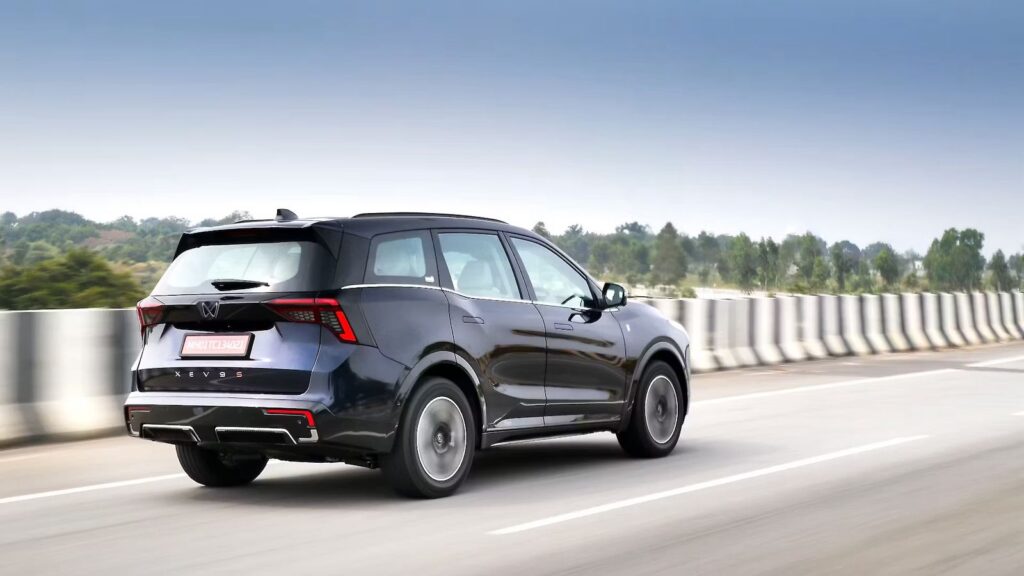
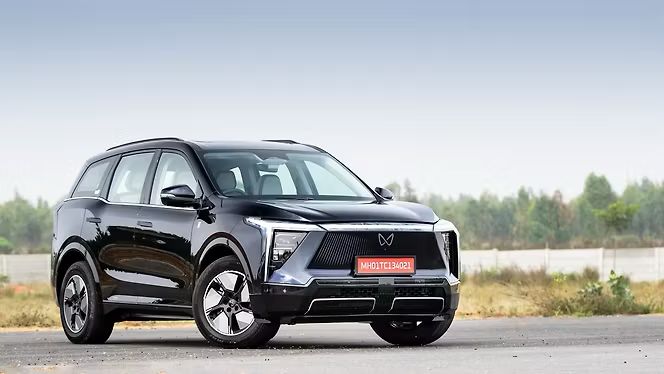
The Mahindra XEV9s is set to have a futuristic and bold appearance, clearly showing that it is an electric SUV. Mahindra’s Born Electric design emphasizes sharp lines, aggressive lighting, and a coupe-like shape. Expect slim LED headlights, illuminated features, flush door handles, and a sleek stance. The XEV9s is made to attract attention and appeal to buyers looking for an EV that stands apart from traditional SUVs.
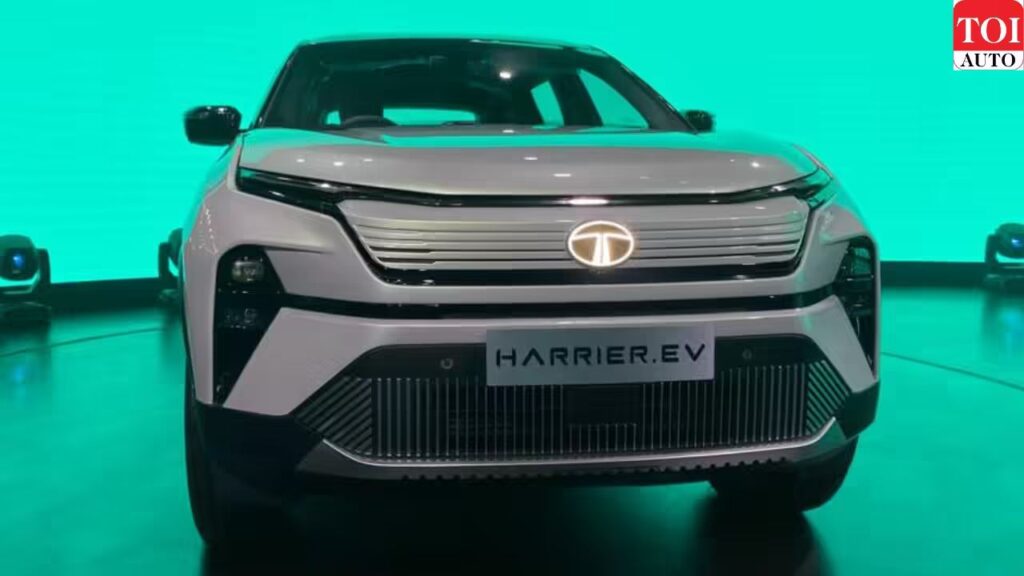
On the other hand, the Tata Harrier EV sticks to a familiar look. It is expected to keep the strong, rugged design of the gasoline Harrier, with updates for the EV like a closed grille, unique alloy wheels, blue accents, and updated lighting. This design makes the Harrier EV easily recognizable and comforting for current Tata customers.
When it comes to size and stance, the comparison between the XEV9s VS Harrier EV gets interesting. The XEV9s might have a more aerodynamic, slightly sloped roofline that promotes efficiency and a modern vibe. In contrast, the Harrier EV’s boxy shape gives it a strong, commanding road presence, which many Indian buyers still prefer.
Ground clearance and wheel design will also matter. The Harrier EV is expected to provide higher ground clearance, keeping its SUV toughness for rough Indian roads. The XEV9s, while still capable, may lean more toward on-road performance and aerodynamic efficiency.
Another major difference between the XEV9s VS Harrier EV is their visual identity. The XEV9s aims to position Mahindra as a global player in the EV market, competing with international electric SUVs. The Harrier EV, meanwhile, relies on Tata’s strong domestic brand, offering comfort through familiarity rather than bold changes.
So, which one looks better? It depends on personal taste. If you’re looking for a futuristic, standout EV, the XEV9s clearly stands out. If you prefer a bold, traditional SUV appearance with electric features, the Harrier EV feels more reassuring.
In summary, the design comparison between the XEV9s VS Harrier EV represents a contrast between innovation and familiarity. Both vehicles are strong in their own ways but target very different buyers.
Interior & Technology Comparison – XEV9s vs Harrier EV
When buyers compare the XEV9s VS Harrier EV, the interior and technology often become the key deciding factors. In 2026, electric SUVs are no longer judged solely on range and performance; screens, software, and cabin experience are equally important.
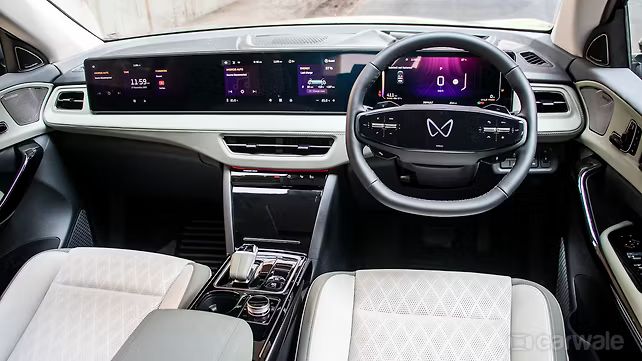
The Mahindra XEV9s is expected to have a highly futuristic interior, in line with its electric platform. Mahindra has already shown next-generation EV cabins featuring large, seamless digital displays, fewer physical buttons, and a tech-focused dashboard design. The XEV9s will likely include a wide panoramic screen setup that combines the infotainment system, digital instrument cluster, and possibly even a display for passengers.
Inside the XEV9s, the material quality is expected to feel premium and modern. It should feature soft-touch surfaces, ambient lighting, and a clean, minimal layout. Being designed as a pure EV allows for a more efficient cabin, offering better legroom, a flatter floor, and increased storage. For tech-savvy buyers, this gives the XEV9s a strong edge in the comparison against the Harrier EV.
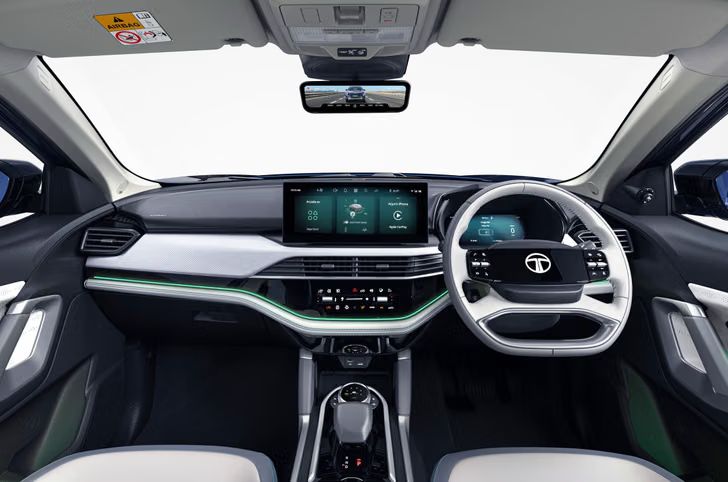
On the flip side, the Tata Harrier EV is expected to keep much of the ICE Harrier’s cabin layout, with updates that reflect its electric identity. Look for a large touchscreen infotainment system, a digital instrument cluster, premium upholstery, and Tata’s latest connected car technology. While it may not seem as bold as the XEV9s, the Harrier EV’s interior will feel familiar, solid, and practical.
Both SUVs are expected to offer:
- Connected car features
- Over-the-air (OTA) updates
- Voice commands
- Smartphone integration
- Premium sound systems
However, the difference lies in the software experience. Mahindra is likely to focus more on EV-specific software, performance customization, and user interface innovation. Meanwhile, Tata will emphasize stability, reliability, and ease of use—an approach that has proven effective for its existing EV lineup.
Space and comfort will also differ. The Harrier EV is expected to provide excellent rear-seat comfort and a more upright seating position, making it great for families. The XEV9s may focus on a sportier seating posture, appealing to younger buyers and enthusiasts.
In summary, the competition between the XEV9s VS Harrier EV comes down to a choice between futuristic innovation and proven practicality. If you want a cutting-edge, screen-heavy EV experience, the XEV9s is the way to go. If you prefer a comfortable, familiar, and user-friendly cabin, the Harrier EV is a strong option.
Battery, Range & Charging – XEV9s vs Harrier EV
When it comes to electric vehicles, battery performance, driving range, and charging speed are the most important factors. This is where the comparison of XEV9s VS Harrier EV becomes interesting. Both SUVs aim to reduce range anxiety, but they tackle the issue in different ways.
The Mahindra XEV9s is expected to be built on a dedicated EV skateboard platform. This design allows Mahindra to optimize battery placement, cooling, and efficiency from the start. This platform should support larger battery packs and may offer various battery options for different models. As a result, the XEV9s is expected to provide a longer claimed range, appealing to buyers who often travel long distances.
Mahindra is also likely to prioritize fast-charging capability. The XEV9s may allow high-speed DC fast charging, enabling users to charge a large portion of the battery quickly. This feature is crucial for highway drivers and early users who want minimal downtime during long trips. Advanced battery thermal management is also anticipated, which will help maintain performance in extreme weather in India.
In contrast, the Tata Harrier EV will probably use a modified version of an existing platform, adapted for an electric powertrain. While Tata has solid experience in EVs, the Harrier EV may not offer the same flexibility as an entirely new EV design regarding battery size and placement. However, Tata is known for providing reliable and well-tested battery systems, giving buyers confidence.
The Harrier EV is expected to offer a competitive real-world range, adequate for daily use and moderate highway driving. Tata may focus more on delivering a consistent, usable range rather than just impressive numbers. Charging speeds are also expected to be decent, though possibly a bit slower than those of the XEV9s, depending on final specifications.
Another key difference between the XEV9s VS Harrier EV is the support for the charging ecosystem. Tata already has a growing charging network and partnerships across India, which could make charging more convenient for Harrier EV buyers. Mahindra, while expanding its EV ecosystem, may initially depend more on third-party charging networks.
Both SUVs are expected to offer home charging solutions, including wall-mounted chargers and smart charging features accessible via mobile apps.
In summary, the comparison of battery, range, and charging between the XEV9s VS Harrier EV shows a clear contrast:
- XEV9s emphasizes longer range, faster charging, and future-oriented EV design.
- Harrier EV highlights reliability, consistency, and support from its ecosystem.
- Your choice will depend on whether you value cutting-edge EV performance or dependable everyday use.
Performance & Driving Experience – XEV9s vs Harrier EV
Performance is an area where electric SUVs can really impress buyers. The comparison of XEV9s VS Harrier EV shows two very different driving approaches. Both are electric and quick, but they deliver power and driving feel in different ways.
The Mahindra XEV9s is being developed as a performance-focused electric SUV. Built on a platform designed specifically for electric vehicles, it will likely feature powerful motors that deliver instant torque. You can expect quick acceleration, strong mid-range power, and multiple driving modes aimed at different conditions. For buyers moving from internal combustion engine SUVs, the XEV9s will feel noticeably faster and more responsive.
Mahindra will likely tune the XEV9s for sportier handling. A lower center of gravity, due to floor-mounted batteries, and a stiffer platform could lead to better cornering stability and confident high-speed performance. The steering response may be sharper, appealing to those who enjoy driving.
On the other hand, the Tata Harrier EV is expected to focus more on comfort and stability than on outright performance. While it will still be quick, like all EVs, the Harrier EV’s tuning will probably emphasize smooth acceleration and relaxed cruising instead of aggressive sprints. This makes it more suitable for families and long-distance travel.
The Harrier EV may come with dual-motor all-wheel drive in higher trims, which would boost traction and all-weather capability. If Tata produces this feature, it could give the Harrier EV a significant edge in the comparison with XEV9s, particularly for buyers who navigate hilly or rough terrain.
Ride quality is another major difference. Tata’s SUVs are known for their planted, solid feel, and the Harrier EV is expected to keep that characteristic. It may feel heavier but more reassuring on highways. The XEV9s, on the other hand, could feel lighter and more agile, especially for city driving.
Driving modes and regeneration settings will be important in both SUVs. The XEV9s is expected to provide customizable regeneration levels and performance profiles, giving drivers more control. Tata may take a simpler approach, focusing on ease of use rather than extensive customization.
In summary, the performance and driving experience of the XEV9s VS Harrier EV can be summed up clearly:
- XEV9s → Faster, sportier, more engaging
- Harrier EV → Smoother, more comfortable, confidence-focused
- Your choice depends on whether you want an exciting electric SUV or a relaxed, family-friendly EV.
Safety & ADAS Features – XEV9s vs Harrier EV
Safety is no longer just a bonus; it is a deciding factor, especially for premium electric SUVs. When buyers look at the XEV9s VS Harrier EV, safety credentials and driver assistance systems are crucial to their decision.
The Mahindra XEV9s is set to be one of Mahindra’s safest vehicles. Built on a born-electric platform, it allows for safety systems to be included from the start. It will likely have a strong body structure, advanced crumple zones, and a battery protection system designed for Indian roads. Mahindra aims for high ratings from Bharat NCAP and Global NCAP, as safety has become a key focus for the brand.
The XEV9s is expected to offer several features:
- Multiple airbags (possibly six or more in higher trims)
- Electronic Stability Control (ESC)
- Traction control
- Hill-start and hill-descent control
- Advanced braking systems
One area where the XEV9s may excel in the comparison with the Harrier EV is ADAS integration. Mahindra has already introduced ADAS in the XUV700, and the XEV9s is expected to take it further. Possible features include:
- Adaptive cruise control
- Lane keep assist
- Forward collision warning
- Automatic emergency braking
- Blind-spot monitoring
On the other hand, the Tata Harrier EV benefits from Tata’s strong safety-first brand image. Tata vehicles generally perform well in crash tests, and the Harrier EV is expected to maintain that reputation. Built on a heavily reinforced platform, the Harrier EV should feel solid and instill confidence.
Expected safety features for the Harrier EV include:
- Multiple airbags
- ESC and traction control
- 360-degree camera
- Advanced braking assist
- Strong battery safety architecture
Tata is also expected to offer ADAS features, especially in top variants. While these may be less aggressive or customizable than Mahindra’s, Tata focuses on reliability and practical use rather than overwhelming features.
Another important difference between the XEV9s VS Harrier EV is driver confidence. The Harrier EV’s larger size and heavier build may provide a sense of security, particularly on highways. The XEV9s might depend more on technology-driven safety and smart systems.
In summary, the safety comparison between the XEV9s VS Harrier EV indicates that both SUVs are expected to be very safe, but they have different strengths:
- XEV9s → Advanced ADAS, tech-driven safety
- Harrier EV → Strong build, proven safety reputation
Both are likely to rank among the safest electric SUVs in India, but your choice will depend on whether you prefer technology or traditional sturdiness.
Platform & Build Quality – XEV9s vs Harrier EV
One of the most surprising and least-discussed differences in the XEV9s VS Harrier EV comparison is the platform and build philosophy. This single factor can affect everything from safety and performance to cabin space and long-term reliability.
The Mahindra XEV9s is expected to be built on a dedicated electric platform, designed specifically for electric vehicles. This offers a major advantage. A ground-up EV platform allows engineers to position the battery pack low and centrally, improving weight distribution, handling, and stability. It also provides better crash protection for the battery and allows for more efficient use of interior space.
Since the XEV9s is not limited by an internal combustion engine-based design, it can provide:
- A flatter floor for better cabin comfort
- Improved legroom and under-seat storage
- Optimized structural strength around the battery pack
- Better cooling and thermal management
These features make the XEV9s more future-proof, especially as electric vehicle technology develops. From a long-term ownership point of view, a dedicated EV platform typically ages better than modified designs.
In contrast, the Tata Harrier EV is expected to be based on a modified version of an existing platform that originally supported internal combustion engines. Although Tata has significantly strengthened and redesigned this platform for electric use, it still has some limitations compared to a completely new EV design.
That said, Tata’s strength lies in strong build quality. The Harrier EV is expected to feel solid, heavy, and sturdy, which many Indian buyers associate with safety and durability. Tata has a lot of experience in adapting platforms for electric vehicles, and its battery safety standards are among the best in the country.
However, when comparing the XEV9s VS Harrier EV, the trade-off is clear:
- The XEV9s focuses on architectural efficiency, agility, and next-generation EV engineering.
- The Harrier EV emphasizes strength, durability, and proven structural toughness.
Another key point is weight management. A dedicated EV platform helps the XEV9s handle battery weight more efficiently, which could lead to better performance and range. The Harrier EV, being heavier, may feel more stable but slightly less agile.
In terms of long-term durability, both SUVs are expected to perform well, but the XEV9s might adapt more easily to future software updates, battery upgrades, and advancements in electric vehicle technology due to its flexible design.
In summary, the platform and build quality comparison between the XEV9s VS Harrier EV highlights a classic battle of innovation against robustness. If you want cutting-edge electric vehicle engineering, the XEV9s leads the way. If you prefer a solid, familiar SUV, the Harrier EV provides confidence.
Expected Price & Value for Money – XEV9s vs Harrier EV
Price often plays a crucial role in decision-making. In the comparison between the XEV9s VS Harrier EV, it may present the most surprising difference for buyers in 2026. Both SUVs are likely to fit in the premium electric segment, but their pricing approaches and value offerings may vary greatly.
The Mahindra XEV9s is expected to be marketed as a premium, tech-savvy electric SUV. With its born-electric platform, modern battery technology, performance-focused design, and futuristic interiors, the XEV9s may come with a higher starting price. Industry predictions suggest it could start in the upper ₹20 lakh range (ex-showroom) and increase based on battery size and features.
Mahindra seems to aim for global positioning with the XEV lineup instead of adopting aggressive mass pricing. This means buyers might pay more, but they will receive innovative EV design, a longer range, quicker charging, and advanced software features. For buyers who are tech-oriented, this could make the XEV9s worth the extra cost when compared to the Harrier EV.
Conversely, the Tata Harrier EV is expected to adopt a more value-driven pricing strategy. Tata Motors has a history of pricing its EVs competitively to boost adoption, and the Harrier EV will likely embody that approach. Its expected pricing may start a bit lower than the XEV9s, making it more reachable for a wider range of customers.
What enhances the Harrier EV’s value is the benefits it offers for the price. Tata may provide solid safety features, a spacious and familiar cabin, a decent driving range, and access to its growing charging network—all at a reasonable price. For buyers seeking a premium EV without entering the luxury market, the Harrier EV is very attractive.
Another key point in the discussion about the XEV9s versus the Harrier EV is long-term value. Tata’s EVs currently enjoy better resale confidence due to brand trust and their first-mover advantage in the Indian EV market. Mahindra is quickly advancing in EV technology, but it is still building its long-term resale reputation in this sector.
In summary:
- XEV9s → Higher price, advanced tech, future-ready premium EV
- Harrier EV → Better price-to-feature ratio, strong value for families
The true “value for money” depends on what buyers prioritize. If you want the most advanced electric SUV that Mahindra can offer, the XEV9s is justifiable at its price. If you are looking for a balanced, sensible electric SUV with strong brand support, the Harrier EV provides better overall value.
Ownership Experience & Brand Trust – XEV9s vs Harrier EV
For many Indian buyers, the final decision between the XEV9s VS Harrier EV will not be made in the showroom. It will take place years after purchase, during ownership. Factors like brand trust, service support, charging options, and software reliability are just as important as range or performance.
Tata Motors currently has a clear advantage in the EV ownership experience. Tata is the leader in India’s EV market, backed by years of real-world data, customer feedback, and ongoing improvements. Buyers choosing the Harrier EV will benefit from Tata’s well-established EV ecosystem, which includes a broad service network, trained EV technicians, and existing charging partnerships across cities and highways.
Tata’s EV ownership experience is generally seen as reliable and reassuring. Software updates come regularly, service costs are clear, and buyers feel confident that Tata will support its EVs over the long term. This level of trust is a significant factor in the comparison of the XEV9s VS Harrier EV, especially for first-time EV buyers.
In contrast, Mahindra with the XEV9s represents a new wave of EV ownership. Mahindra is entering the EV market aggressively with its Born Electric lineup, and the XEV9s is expected to feature its most advanced technology so far. Here, the ownership experience will likely focus on digital integration, over-the-air updates, and app-based control.
Mahindra’s challenge will be maintaining consistency in execution. While Mahindra has a strong service network, its experience specific to EVs is still growing compared to Tata. Early adopters of the XEV9s may see quicker software updates and feature improvements, but they may also encounter some initial issues that often arise with new tech-heavy vehicles.
Charging support is another key consideration. Tata already has a wider charging network due to partnerships and its own initiatives. Mahindra is expanding quickly, but it may initially depend more on third-party charging stations. For city drivers, this may not be a major concern, but for those traveling on highways, Tata still has the advantage.
Resale value and long-term confidence also tilt in Tata’s favor for now. The Harrier EV benefits from Tata’s early leadership in the EV market, helping to maintain better resale expectations. The XEV9s, while exciting, will need time to establish itself in the resale market.
In summary, the ownership comparison between the XEV9s VS Harrier EV is clear:
- Harrier EV → Safer, more predictable ownership, stronger trust
- XEV9s → More exciting, tech-driven, future-oriented ownership
If you want peace of mind, Tata is the way to go. If you want to be part of the next wave of EVs, Mahindra provides that thrill.
Final Verdict – XEV9s vs Harrier EV: Which One Should You Buy in 2026?
After examining all the key aspects, the comparison between the XEV9s and Harrier EV reveals that it’s not simply about deciding which is better. Rather, it’s about which electric SUV fits your mindset, usage, and expectations for 2026.
The Mahindra XEV9s stands out as a more forward-looking and ambitious electric SUV. It is built on a dedicated EV platform, features a technology-rich interior, and promises improved performance, faster charging, and a more software-oriented experience. For buyers eager to engage with the future of electric mobility, the XEV9s represents a significant leap forward. It clearly targets early adopters, tech enthusiasts, and those who desire a premium, fast, and competitively global EV.
However, this future-focused design may also lead to higher prices and a learning curve. Given that the XEV9s showcases Mahindra’s latest EV technology, buyers must be comfortable with innovation, updates, and changeable systems. If you enjoy the latest tech and don’t mind being one of the first to embrace it, the XEV9s will feel exciting and rewarding.
On the other hand, the Tata Harrier EV seeks to be the more dependable choice. It may not offer as bold a design or technology, but it greatly benefits from Tata’s experience in the EV market, strong safety record, and established charging network. For families, long-distance travelers, and first-time EV buyers, the Harrier EV provides reassurance and consistency.
The Harrier EV should deliver good range, strong safety features, a comfortable ride, and reliable ownership—without pushing users into overly complex technology. Its pricing is also likely more affordable, appealing to buyers who want a premium electric SUV without venturing into experimental experiences.
So, which one should you buy?
Choose the XEV9s if:
- You want the most modern EV design
- Performance, fast charging, and advanced tech are important to you
- You appreciate bold design and innovation
- You’re okay with being an early adopter
Choose the Harrier EV if:
- You value brand trust and comfort in ownership
- You prioritize strong safety and family-friendly features
- You prefer tried-and-true systems over new tech
- You seek better value and support from the ecosystem
Final Take
The choice between the XEV9s and Harrier EV centers on innovation versus trust. Neither SUV is a wrong choice; it depends on what you prioritize in your electric journey. In 2026, buyers will be fortunate to have two outstanding, Indian-made electric SUVs that meet very different needs.
- If you want the future, choose the XEV9s.
- If you want confidence, go for the Harrier EV.